
Tarot Card Reading and Meaning
DEN TSMOLifestyle
4.81.01K Reviews
- Version
- 3.10.1
- Installs
- 100.00K
- Age Rating
- Mature 17+
Screenshots
Our Review of Tarot Card Reading and Meaning
 Analysis by Appyee
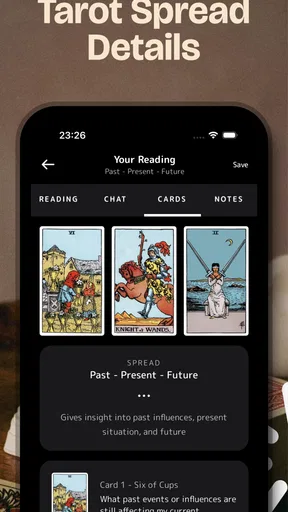
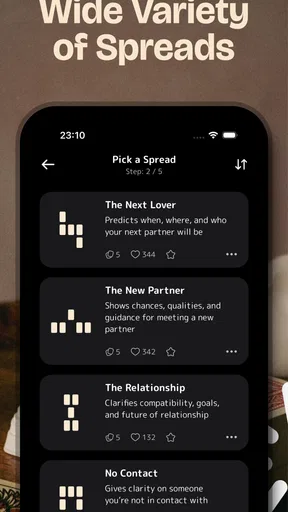
I approached Tarot Card Reading and Meaning as a reflective lifestyle app rather than a replacement for a professional tarot reader. Its main appeal is the combination of AI chat, the complete set of 78 tarot cards, and more than 50 spreads, giving me several ways to explore a question instead of relying on a single card pulled from a digital deck. The experience is aimed at people who enjoy tarot as a tool for journaling, self-questioning, or quiet entertainment.
The app is free to download, although optional purchases range from under a dollar to nearly sixty dollars per item. It is published by DEN TSMO and carries a Mature 17+ age rating. That age label is worth taking seriously: this is an app for personal reflection around adult themes, not something I would install casually on a child’s device.
How the tarot experience feels in everyday use
The first thing I noticed is that the app’s value depends less on flashy presentation and more on how well I frame a question. Asking something broad such as “What will happen to me?” produces a less useful experience than asking, “What am I avoiding in this work decision?” The cards become more meaningful when I give the reading a clear situation, a time frame, and an honest emotional angle.
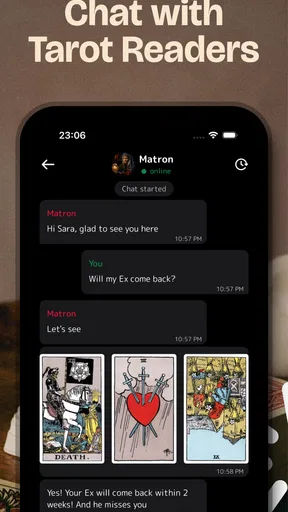
The AI chat makes the app feel more conversational than a traditional digital tarot deck. Instead of stopping after a card meaning, I can continue exploring the interpretation and ask for another perspective. That is especially useful when a reading feels vague. I can ask the app to focus on the emotional side of a situation, the practical obstacle, or the action I can take next. I found this follow-up style more helpful than repeatedly drawing cards without thinking about the original question.
At the same time, I would not treat the chat as an authority. AI can produce confident-sounding interpretations, and tarot itself is symbolic rather than a dependable method for predicting events. I get the best results when I use the app as a prompt for reflection. If I want a firm answer about health, money, legal matters, or another high-stakes decision, I would use qualified human advice instead.
Choosing a spread instead of drawing at random
The large selection of spreads is more important than it may appear at first. A one-card reading is convenient when I only have a few minutes, while a broader spread gives structure to a complicated question. For a difficult conversation, I might use positions that help me think about my own attitude, the other person’s perspective, the source of tension, and a constructive next step.
My practical tip is to choose the spread before writing the question. Otherwise, it is easy to keep changing the layout until the result says something reassuring. Selecting a format first creates a small boundary around the session and makes the interpretation feel less like a search for a preferred answer.
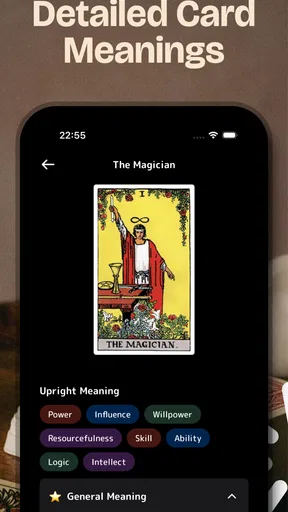
The full 78-card system also helps the app feel more substantial than a simple inspirational quote generator. Major Arcana cards can encourage me to consider larger transitions or recurring themes, while Minor Arcana cards often bring the reading back to daily habits, communication, work, and emotional reactions. I found that distinction useful when a reading felt too dramatic: sometimes the message points to a small behavior rather than a life-changing event.
A realistic evening use case
Imagine finishing a stressful day and feeling uncertain about whether to accept extra responsibility at work. Instead of asking the app to predict whether the decision will succeed, I would phrase the question around readiness: “What should I understand before agreeing to this?” I could begin with a focused spread, read the interpretation, and then use the AI chat to examine the card connected with pressure, boundaries, or motivation.
The useful outcome is not a guaranteed yes or no. It is a short list of questions I might otherwise overlook: Am I accepting this to grow, to please someone, or because I am afraid to refuse? What support would I need? Which assumption is driving my anxiety? I would then write those answers in a notes app or journal. In that workflow, the tarot reading starts the thinking process, but I remain responsible for the decision.
Speed during short and longer sessions
For quick readings, the app’s format is naturally well suited. A single question and a compact spread should feel less demanding than setting up a full physical deck, especially when I want a private moment on a commute or before bed. The AI chat also reduces the need to search separately for every card’s traditional meaning.
Longer sessions are a different matter. Once I move from one spread into several follow-up questions, the experience becomes more dependent on how clearly I keep track of the original topic. The app can continue the conversation, but more text does not automatically mean more insight. I recommend pausing after each interpretation and writing down the one sentence that feels most relevant. That prevents a long chat from turning into a stream of overlapping possibilities.
I also avoid drawing again immediately when I dislike an answer. Repeating a spread until I receive a comforting message weakens the exercise and can encourage indecision. A better approach is to ask one clarifying question, then stop. This is one of the most important trade-offs with an always-available AI reading: convenience makes it easy to reflect, but it also makes it easy to overuse.
What happens when the app is used heavily
Heavy use is not necessarily about processing power. It is more likely to happen when someone explores several spreads in one sitting, continues a long AI conversation, and revisits the same issue from different angles. The mental burden can become greater than the technical one. I noticed that the quality of a session depends on restraint, because too many interpretations can make a simple concern feel mysterious or urgent.
For that reason, I prefer a three-step routine. I define one question, choose one spread, and allow myself one follow-up. If the issue still feels unresolved, I take the result into a journal rather than immediately starting another reading. This workflow makes the app feel calmer and also helps distinguish genuine reflection from reassurance-seeking.
Users who want to explore tarot cards for study may use the app differently. They can compare how a card’s traditional symbolism changes according to its position in different spreads. That can be a useful way to notice patterns in interpretation, but I would still cross-check important learning with a reputable tarot book or an experienced reader. The app is convenient for practice, not necessarily a complete course in tarot history or technique.
Stability and recovering from an interrupted reading
In normal use, I found the experience straightforward enough for casual sessions. The most reliable habit is to keep questions focused and avoid treating a single reading as a permanent record of reality. If a session is interrupted, I would note the question and the cards before leaving the screen, especially when I am working through a larger spread.
That small precaution matters because the usefulness of a reading comes from its context. Knowing only that a particular card appeared is less helpful than remembering whether it represented an obstacle, an influence, an outcome, or advice. I recommend keeping a simple journal entry with the date, the question, the spread, and the interpretation that stood out. This also lets me look back later and see whether the reading helped me act differently, rather than judging it only by whether a prediction came true.
The app’s current version is 3.10.1, and it supports devices running Android 7.0 or later. That gives it a broad compatibility range for Android users, including people who do not replace their phones frequently. Still, compatibility is not the same as identical comfort on every device. A larger screen is more pleasant for reading a long interpretation and moving through a multi-position spread, while a smaller or older phone may make extended sessions feel cramped.
Device demands and practical limitations
Tarot Card Reading and Meaning is not the kind of app I would choose for graphics-heavy entertainment. Its central activity is reading, typing, and moving through interpretations, so the main practical concerns are screen comfort, keyboard responsiveness, and whether the device handles an extended chat comfortably. I would expect a recent mid-range phone to be a sensible fit, while an older device may be better for short readings than long conversations.
Because the app is centered on AI chat, the quality of the interaction also depends on the wording I provide. A vague prompt can make the result feel generic, and a highly emotional prompt can invite an interpretation that I take too personally. I get better results by including only relevant context and asking for a grounded reflection rather than a definite prediction.
The free entry point makes experimentation easy, but the optional purchase range deserves attention before I become a regular user. I would begin with the free experience and decide whether the reading style genuinely adds value to my routine. Someone who is prone to impulse spending, or who may keep paying for repeated reassurance, should set a firm budget before exploring optional items.
The Mature 17+ rating is another practical constraint. I would not recommend treating the app as a general family-friendly fortune-telling toy. Its themes may suit adults who can approach tarot with perspective, but younger users may need guidance about the difference between symbolic entertainment and dependable advice.
Who will enjoy it, and who should choose something else
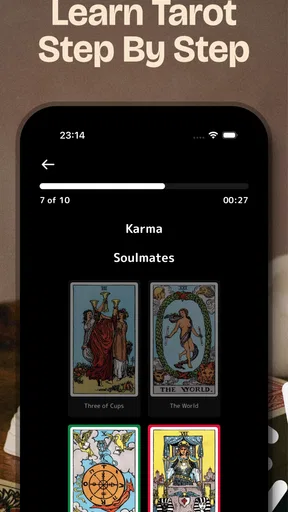
I think this app suits curious beginners who want an approachable way to learn how spreads and card meanings work. It is also a good fit for experienced tarot users who want a portable prompt for journaling, particularly when they do not have a physical deck nearby. The AI chat gives both groups a way to continue thinking after the initial cards appear.
It is less suitable for someone who wants a completely traditional, hands-on tarot ritual. A physical deck offers tactile handling, personal shuffling habits, and a slower pace that this app cannot reproduce. It is also not the best choice for users who want a human reader’s empathy, life experience, and ability to notice subtle details in a conversation.
I would skip it if I were looking for objective forecasting or guaranteed answers. The app can help me organize thoughts, but it cannot remove uncertainty from relationships, career choices, or personal plans. I would also avoid using it as a substitute for professional support during a mental health crisis or for specialist guidance in medical, financial, or legal situations.
How it compares with familiar alternatives
Compared with a physical tarot deck, the app wins on portability and immediate interpretation. I do not need to remember every card meaning, and the spread choices are available in the same place as the chat. The physical deck wins on ritual, concentration, and the feeling of participating directly in the reading.
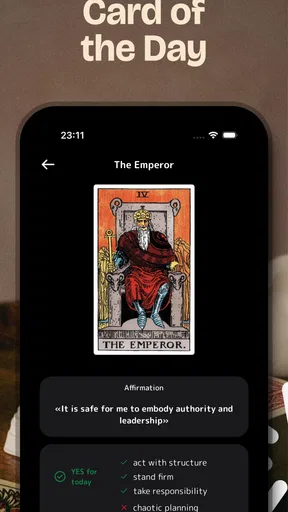
Compared with a basic card-of-the-day app, this one offers more room for a complete question-and-response process. A simple daily card can be pleasant and quick, but it may not provide enough structure for a complicated situation. Here, the combination of the whole deck, numerous spreads, and conversational follow-up makes the experience more flexible, provided I use that flexibility carefully.
Compared with reading tarot meanings on a website, the app is more convenient for keeping a session together. I can move from the spread to an interpretation without opening several pages or losing the thread of the question. The trade-off is that a conversational AI explanation may sound polished while still being broad. When I want historical detail, multiple scholarly viewpoints, or a deeper study of symbolism, a well-regarded book remains the better tool.
My performance verdict after regular use
My overall impression is that Tarot Card Reading and Meaning works best as a quiet reflection companion. Its speed is suitable for short readings, its broad spread collection supports more deliberate sessions, and its AI chat makes follow-up questions feel natural. The app does not need to be technically elaborate to be useful; its real test is whether it helps me ask better questions without encouraging dependence on the answers.
The 4.8 average from roughly 7,300 ratings and its 100K-plus installs suggest that many Android users have found the concept appealing. Those figures do not change my main advice: try it for the workflow, not for promises of certainty. I would judge it by whether a reading helps me identify a feeling, clarify a choice, or begin a journal entry.
After using it, I would recommend starting with one-card or focused spreads, saving longer sessions for moments when I can think without rushing, and setting a spending limit before exploring optional purchases. I would also keep a record of questions and actions rather than only recording predictions. The strongest use of this app is not asking the cards to decide for me, but using them to notice what I already need to examine.
For an adult Android user who enjoys tarot and wants an accessible AI-guided format, Tarot Card Reading and Meaning is a worthwhile free starting point. It is flexible, easy to approach, and more engaging than a static list of card definitions. Just keep its role clear: it is a reflective lifestyle app from DEN TSMO, not a professional adviser, a replacement for a physical deck, or a guarantee about what comes next.
Verdict
Strengths of Tarot Card Reading and Meaning
- Simple card meanings make readings easy for beginners.
- Offers a convenient way to explore tarot without a physical deck.
- Useful for daily reflections, journaling, and personal guidance.
- Card interpretations can inspire thoughtful questions and self-discovery.
- Digital readings are quick to access whenever you need them.
Limitations of Tarot Card Reading and Meaning
- Readings may feel generic compared with guidance from a skilled reader.
- Some features or interpretations may require in-app purchases.
- Results should not replace professional medical, legal, or financial advice.
- Frequent prompts or reminders may feel distracting to some users.
- The experience depends on personal belief and openness to tarot symbolism.
Similar Picks in This Category
View All
SmartThings
Samsung Electronics Co., Ltd.4.6

Google Home
Google LLC4.0

Pinterest4.2

Astrotalk - Talk to Astrologer
Astrology & Horoscope4.7

My Verizon
Verizon Consumer Group4.5

Samsung Wallet (Samsung Pay)
Samsung Electronics Co., Ltd.4.1
Frequently Asked Questions
What is Tarot Card Reading and Meaning, and how does it work?
Tarot Card Reading and Meaning is designed to introduce users to tarot cards, their traditional symbolism, and common interpretations. After choosing or drawing cards, the app presents explanations based on the selected spread, card position, and whether a card appears upright or reversed. It is best viewed as a reflective and entertainment tool rather than a guaranteed method of predicting future events.
Is Tarot Card Reading and Meaning suitable for beginners?
Yes, the app can be useful for beginners who want to learn the basics of tarot without immediately purchasing a physical deck or studying a large reference book. Card descriptions generally explain major themes, keywords, and possible meanings in an accessible way. However, new users should still take time to understand the difference between the Major and Minor Arcana and remember that interpretations may vary between tarot traditions.
Can Tarot Card Reading and Meaning accurately predict the future?
Tarot readings should not be treated as scientifically proven predictions or as a substitute for professional advice. The app offers interpretations based on established tarot symbolism, which may help users reflect on their emotions, choices, and current circumstances. Results can feel personally meaningful, but they are subjective and should not be used as the sole basis for medical, financial, legal, relationship, or other important life decisions.
Does the app require an internet connection or include in-app purchases?
The exact requirements may depend on the version installed and the platform where it is downloaded. Some tarot applications allow basic card meanings and readings to work offline, while additional content, advertisements, daily readings, or premium spreads may require an internet connection. Before downloading, users should check the store listing for current subscription details, optional purchases, advertising information, and any permissions requested by the app.
What should I know about privacy when using tarot readings?
Before using Tarot Card Reading and Meaning, review its privacy policy and the permissions shown on the Android or iOS download page. Avoid entering highly sensitive personal information, such as financial details, passwords, medical records, or private information about another person. If the app offers accounts, saved readings, or personalized features, check how that information is stored, used, and whether it can be deleted.
